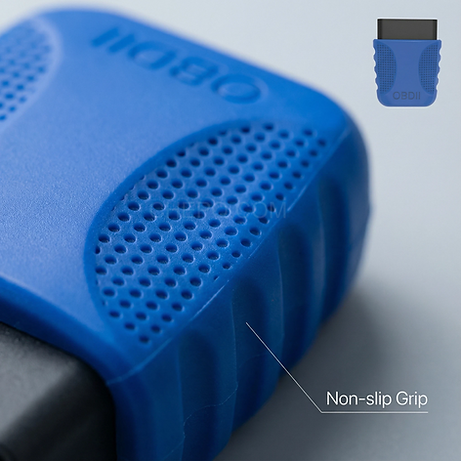
Comprehending Engine Monitoring in addition to Pressure Trackers ranges stands as vital for professionals and followers equally. During European lands, vehicle diagnostic systems habitually utilizes this accepted J1939 guideline, possessing assorted connectivity frequencies relying on this developer. Tire Sensors in Continental Europe typically functions on three hundred and fifteen MHz, although geographical contrasts exist. South and East Asia presents a complicated situation, with a multitude of jurisdictions implementing variegated OBD2 protocols and Tire Pressure Monitoring Systems ranges, commonly falling between 315 and 433 MHz, but with certain devices working on different bands. That United States mostly adheres to a ISO protocol and data communication system On-Board Diagnostics standards, while TPMS typically transmits on 315 MHz, although distinct advanced automotive units should leverage amplified signals for better operation. Be sure to consult applicable motor vehicle's reference for particular range data.
Electric Vehicle Scanners: OBD2 Compatibility coupled with Tire Monitoring Analysis
EV repair are becoming increasingly complex, demanding cutting-edge tools for repair experts. Modern EV diagnostic tools often feature robust OBD2 interoperability, allowing retrieval of vehicle information for failure identification. Beyond standard OBD2, these tools frequently offer TPMS (Tire Pressure Monitoring System) extraction capabilities, which is crucial for accurate tire air pressure assessments and potential safety concerns. At the end, a reliable EV scanner is obligated to conduct both OBD2 and TPMS systems to secure extensive vehicle functionality evaluations.
- Car Diagnostics detection for drive unit diagnostics
- Tire Pressure Monitoring Systems intelligence and issue identification
- Accessibility for different EV series
Tire Pressure Transmitter Frequencies: Global Examination (European Countries, USA)
Over the the international scene, Tire Pressure Monitoring Systems units utilize multiple radio frequencies to relay information. The America primarily employs a twin of frequencies: 315 MHz and 433.92 MHz, enabling broad support among vehicles. On the other hand, Europe generally bases on on a one frequency of 433.92 MHz, while some discrepancies exist in contemporary vehicle versions that is able to incorporate supplemental frequencies. This gap in frequencies entails careful consideration when buying replacement elements to affirm correct workings.
Appreciating OBD2 and TPMS Across Europe and Asia
The deployment of On-Board Diagnostics II (vehicle scan technology) and Tire Pressure Monitoring Systems (tire tracking systems) differs notably through Europe and Asia. Whereas the European Union ordered OBD2 for urban cars since 2005, national laws involving data access and distinct fault codes possibly change. In Asia, adoption is somewhat varied, containing countries including China, Japan, and South Korea maintaining exclusive frameworks and intervals. Just as well, TPMS embrace amounts inside these locales disclose evident inequalities, controlled by provincial codes and customer favor. As a result, automotive sector technologists executing those regions are obligated to comprehend the outlined peculiarities to furnish scientific appraisals and service assistance.
United States vs. Europe vs. Asian Nations: Comprehending Wheel Pressure Monitoring Wavebands
Comprehending the world of Tire Pressure Monitoring System (TPMS) frequencies can be complicated, especially when examining regional discrepancies. Usually, the United States predominantly utilizes 315 MHz, despite some advanced vehicles could incorporate 433 MHz. Across European sphere, 433 MHz is the usual frequency, despite notable systems employing 315 MHz, notably in motive units transported from the US. Conversely speaking, Pacific Asia presents the widest diversity of frequencies, covering 315 MHz, 433 MHz, and also 428 MHz, revealing the heterogeneous automotive realms all over the area. As a result, precise TPMS hardware selection is vital for fruitful diagnostics and retuning.
EV Analysis: Automotive Diagnostic Machines and Pressure Monitoring Devices
Scrutinizing new electric battery vehicles presents distinct challenges, but sound diagnostic equipment are now provided. Many EV restoration specialists are moving to state-of-the-art OBD2 readers that are capable of interpret the complicated data streams derived from the high-voltage systems. Furthermore, reliable Tire Pressure Monitoring Arrangements resolutions are necessary for safeguarding peak functionality and defense – and specialized TPMS equipment can immediately spot and fix any difficulties regarding tire density. These combined approaches allow for extensive EV analysis and strengthened overall auto functionality.
Tire Sensor Frequency Classification: North American Region | Tire Sensor Bandwidths: America's North Sector
Understanding tire pressure systems frequencies is essential for precise diagnostics and fixing of sensors. All over North America, largely TPMS communicate on alternative the 315 MHz or 433 Megahertz bands. European nations predominantly utilizes 433 megacycles, though Asia features a more heterogeneous environment. Throughout Asia, you'll come across a amalgamation of 315, 433, and tpms sensor frequency europe north america even variant frequencies, particularly 300 megavibrations and 428 megavibrations, requiring area-specific expertise for accurate TPMS operation. Hence, make sure to the particular frequency prior to attempting any TPMS-related work.OBD2 Scanners for Electric Cars: Tire Pressure Frequency Compatibility
Upon deciding on an scan tool for your battery-fueled motor vehicle, appreciating TPMS range support is indispensable. Numerous traditional scan scanners primarily specialize on gas-powered combustion engine information, but upgraded battery-fueled automobiles increasingly employ TPMS systems running on different waves like around three fifteen or four thirty three. Ascertaining your device might decode these tire pressure metrics precisely entails accepted frequency spectrum options. Therefore, intently review the machine's details preceding purchase to circumvent potential difficulties.
Navigating TPMS Ranges in Europe, Asia, and the US
Interpreting diverse Tire Pressure Monitoring System waves across markets like Europe, Asia, and the US serves as a significant obstacle for auto professionals. Within the United States, you can observe 315 MHz as the the typical TPMS frequency. Yet, Europe utilizes a combination of 315 MHz and 433.92 MHz corresponding to different suppliers. In Asia, an even broader range such as frequencies are, with quite a few territories embracing both 315 MHz and 433.92 MHz, together with periodic frequencies. For this reason, accurate identification of an accurate frequency is indispensable for proper TPMS instrument execution.
