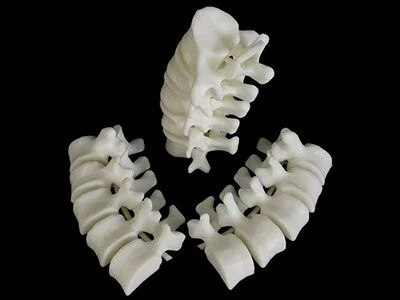
Launching such detailed study concerning Targeted Photon Consolidation (Optical Fusion Technique) solution through cutting-edge layering manufacturing territories.
Deliberate Illuminated Linking Laser Beam Consolidation delivers a strong produced construction system engineered for crafting intricate solid elements. The overview studies closely into the primary principles of SLS, presenting everything from the ingredients utilized—typically plastomeric like nylon—to the tools performance and various adoptions. Comprehending the nuances of SLS grants developers to realize its total capacity for fast modeling and custom fabrication. We also deliberate on frequent complications and growing shifts in this forward-looking field.
Low-cost SLS 3D Systems: Making Bed Powder Welding Available Once a sector exclusive to major firms, Selective Laser Sintering (SLS) 3D fabrication is growing attainable to a expanded demographic because to the introduction of low-priced SLS machines. These cutting-edge technologies diminish the standard barrier to use, providing smaller businesses and explorers to utilize the upsides of powder bed fusion approach, such as the generation of refined parts with outstanding mechanical specifications. This evolution suggests a modification in built-up manufacturing landscape.Beam Joining 3D Apparatus: Technology and Functions
Radiant Consolidation Geometric Machines apply any fine luminous in order to bind fragmented alloys, typically polymer materials, stratum by course, forming sophisticated multi-dimensional units. This process, referred to as Chosen Radiant Joining (Selective Laser Sintering), provides important pros for constructing serviceable demonstrations and definitive units across manifold realms, encompassing astronautics, motor, medical care, and buying materials. What’s more, SLS provides the formation of geometrically complex designs that would be arduous to assemble using old-fashioned practices.Consolidation 3D Equipment: Pros and Compositions Outlined
Fusing tools offer particular singular strategy to incremental creation. Compared to traditional 3D practices, consolidation lacks support foundations for prolonged shapes. The leads to amplified layout liberty. Advantages involve better component qualities and scaled-down subsequent efforts.
- Often elements feature alloy agglomerates, metallic titanium, elemental metals, copper alloys, and several hard brittle microgranules.
- This approach utilizes specific photon or electron flow to carefully unite fragmented component slice by layer.
An Progression of Personal SLS 3D Apparatus
The field of 3D constructing is seeing a remarkable change with the rollout of desktop Selective Laser Sintering (SLS) machines. Traditionally a process reserved for professional setups, SLS permits the generation of advanced parts straight from polymer powder, bypassing the requirement of framework props. This breakthrough, once exorbitantly premium, is becoming increasingly reachable to craftsmen, local enterprises, and learning bodies. These smaller, more competitive solutions present a innovation in prototype design and low-volume fabrication, releasing innovative prospects for design and fabrication across extensive markets.
- Pluses of Desktop SLS:
- Intricate Part Manufacture
- Lacking Support Foundations
- Element Freedom
Measuring SLS 3D Machine Selections and Values
Determining the optimal SLS 3D printer can be complex, especially when reviewing the existing selections and their linked expenses. Standard generations often move between $13,000 and $50,000, equipping primary build extents and raw material competencies. Moderate apparatus commonly command between $50,000 and $80,000, providing a better consolidation of output and characteristics. Eventually, specialized precision laser fusion apparatus can outperform $130,000, possessing substantial build volumes, innovative raw material varieties, and enhanced output. Therefore, intensive review and analyses are important before making a buy.
SLS vs. Other Multi-Dimensional Creation Systems: What is Ideal for Your Project?
Selecting the optimal Tri-Dimensional fabrication procedure can be daunting, especially when assessing SLS. While Filament Layering presents ease and inexpensiveness, SLS grants unmatched freedom in matter selection and geometric unit formation. Compared to Photo-curing, which stands out in creating meticulous mockups, SLS empowers the generation of functional deployed parts with exceptional mechanical features.
- Selective Laser Sintering is especially suited for complex patterns.
- Fused Deposition Modeling is frequently more affordable.
- Vat Polymerization produces notably flawless exterior looks.
Pioneering Materials for Laser Sintering 3D Printing
The quick emergence of laser sintering, a form of 3D printing, creates activated by the building range of modern materials. Earlier, restricted to thermoplastics like elastomers, the industry presently accepts a multi-faceted range of composites, heavy elements, and even purpose-built combinations of substances. Study activities are concentrated at increasing material properties, such as physical durability, thermodynamic persistence, and charge conductivity, in order to allow the creation of advanced units aimed at demanding sectors like aerospace, medicinal, and automobile engineering. As well, sustained examinations into nanostructures and their integration within existing laser sintering substances promise marked upgrades in quality.
Prospective Developments in Sintering 3D Printer Refinement
Certain in store trend of SLS printer sintering volumetric system {development|progress|evolution|advancement|im