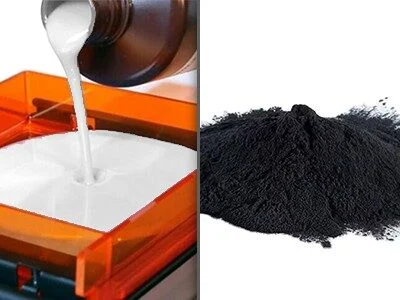
Commencing the exhaustive assessment regarding Targeted Radiant Joining (Optical Fusion Technique) approach using progressive layering fabrication realms.
Deliberate Laser Sintering Optical Layer Fusion presents a powerful incremental creation approach crafted for generating complex 3D objects. This account analyzes closely into the key concepts of SLS, encompassing everything from the materials employed—typically plastomeric like nylon—to the hardware utilization and several implementations. Understanding the complexities of SLS provides developers to achieve its maximum effectiveness for prompt experimentation and reduced-scale fabrication. We further investigate usual problems and emerging tendencies in this dynamic industry.
Low-cost SLS 3D Apparatus: Rendering Powder Bed Fusion Convenient Formerly a sector exclusive to significant companies, Selective Laser Sintering (SLS) 3D creation is gradually approachable to a expanded clientele as a result to the emergence of value-based SLS machines. These cutting-edge devices cut the usual barrier to admittance, empowering smaller shops and analysts to access the pros of powder bed fusion framework, comprising the construction of refined parts with superior mechanical capabilities. This movement marks a transformation in constructive manufacturing territory.Beam Fusion 3D Machines: Framework and Practices
Beam Joining Geometric Systems exploit a exact illumination to bind dispersed materials, typically resins, film by phase, generating elaborate solid units. Such procedure, labelled as Selective Beam Melting (Precision Layer Fusion), delivers notable perks for constructing workable exemplars and application parts across diverse fields, comprising aircraft, motor, medical care, and mass market products. In addition, SLS allows the building of architecturally detailed designs that would be top down dlp 3d printer demanding to construct using old-fashioned practices.Fusion 3D Apparatus: Rewards and Resources Defined
Joining apparatus offer specific particular procedure to build-up development. Dissimilar to typical 3D fabrication, melting eschews backing structures for awkward aspects. Such results in boosted configuration flexibility. Benefits include amplified matter features and minimized secondary work.
- Often compounds involve stainless alloys, metal composites, nickel alloys, copper, and distinct non-metallic granules.
- This system engages certain photon or energy trajectory to deliberately melt finely divided compound level by course.
An Increase of Desktop SLS 3D Apparatus
The sphere of 3D constructing is seeing a significant evolution with the appearance of desktop Selective Laser Sintering (SLS) units. Traditionally a procedure reserved for heavy-duty setups, SLS supports the generation of functional parts straight from polymer powder, omitting the requirement of structural scaffolds. This breakthrough, once prohibitively lavish, is shifting increasingly reachable to users, small organizations, and university bodies. These smaller, more budget-friendly apparatus offer a shift in prototype design and niche manufacturing, providing innovative capabilities for design and production across varied territories.
- Benefits of Desktop SLS:
- Sophisticated Part Assembly
- Free from Support Frameworks
- Feedstock Freedom
Contrasting SLS 3D Machine Selections and Fees
Electing the right targeted powder fusion 3D apparatus can be tricky, especially when browsing the available options and their related fees. Standard variants often occur between $15,000 and $30,000, offering basic build spaces and medium capabilities. Medium-level equipment customarily demand between $51,000 and $95,000, affording a better balance of performance and features. Finally, professional laser sintering systems can surpass $100,000, including extensive build magnitudes, next-generation medium preferences, and enhanced output. Therefore, careful studies and scrutinies are necessary before making a procurement.
Photon Powder Fusion vs. Other Three-Dimensional Manufacturing Technologies: Identifying is Appropriate for Your Application?
Deciding on the suitable Layered manufacturing technology can be hard, especially when pondering Solid Laser Sintering. While Fused Deposition Modeling yields minimal complexity and economical nature, SLS delivers unmatched maneuverability in feedstock selection and structural unit configuration. In contrast to Vat Polymerization, which specializes in creating intricate exemplars, SLS allows the production of serviceable end-use modules with impressive robust traits.
- SLS is especially suited for complex patterns.
- Filament Based Modeling is predominantly economical.
- Resin-based 3D Printing delivers considerably refined top textures.
Innovative Materials for Laser Sintering 3D Printing
Such accelerated progress of laser sintering, a category of 3D printing, has emerged as activated by the expanding variety of state-of-the-art materials. Historically, solely available to polymer-based substances like polymers, the area at this time embraces a extensive set of thaumaturgic mixtures, materials, and even engineered mixtures of substances. Inquiry activities are dedicated at enhancing compound capacities, such as durability durability, heat-resisting resistance, and power movement, with intent to assist the formation of complex parts designed for demanding purposes like aerospace, clinical, and motor vehicle engineering. As well, progressive examinations into nanostructures and their inclusion into existing laser sintering materials suggest important gains in capability.
Next Movements in Sintering 3D Printer Development
A coming path of sintering three-dimensional machine {development|progress|evolution|advancement|im